
Compare and contrast


Azza Fahmy is an Egyptian jeweller who learned her silversmithing skills at a local Egyptian market and built herself up and became international. She started in journey to becoming a jewellery in the late 1960s.
In that time it was quite uncommon in Egypt for a well-educated, wealthy woman to work in a local silversmithing workshop. Women of this class were expected by society to prioritise taking care of their families or seek higher-profile careers. Therefore, traditional parts of society would have disapproved of a woman working physically, especially in a trade like silversmithing that is dominated by men. By doing so Azza Fahmy pushed boundaries and challenged traditional gender norms, proving her independence, determination, and willingness to go against the norms of society. This was viewed as out of the ordinary, and it represented women’s empowerment and the breakdown of conventional barriers.
Azza Fahmy had taken the role of translating the region’s culture and art and historic references to the world, through contemporary jewellery design.
1980 she launched her first collection “houses of the Nile” where she also showed how she didn’t only push traditional boundaries but also creative ones. She envisioned how combining silver and gold would create a beautiful contrast and became the first jeweller in Egypt who mixed materials together. This became her signature creating an authentic and innovative style in her work.
She used a lot of different methods to portray her heritage in her jewellery, from poetry, calligraphy and motifs to architecture, history and the society.
Azza Fahmy is a very well educated woman who enjoys reading and learning a lot. One of her inspirations is a famous historian and philosopher of the 11th century called. She was inspired by his book “ The Ring (or collar) of the dove”.
Ibn Hazm’s “The Ring of the Dove” is a treatise on love and the intricacies of romantic relationships. In the book, Ibn Hazm explores the nature of love, its different manifestations, and the challenges and joys it brings. He discusses topics such as the psychology of love, the role of passion, the dynamics of courtship, and the pain of separation. Drawing from his own experiences and observations, Ibn Hazm provides insights into human nature and the complexities of love, offering guidance and reflections on matters of the heart. Ibn Hazm’s “The Ring of the Dove” was quite revolutionary for its time in terms of its open and frank discussion of love and romantic relationships. During the era in which it was written (11th century), many scholars focused on religious and philosophical topics, and discussions about love were often limited to mystical or allegorical interpretations. Ibn Hazm, however, delved directly into the human experience of love, addressing its emotional, psychological, and practical aspects without allegorical or mystical layers. This direct exploration of love and its complexities was indeed pushing cultural boundaries for the time, making his work both controversial and groundbreaking.
Azza Fahmy explained “in our Islamic culture, love is either veiled or metaphysical. Or so I believed until I read the ring of the dove.”
Azza Fahmy’s work is a powerful storytelling method and also a method to push boundaries in a lot of ways.
She launched another collection where she used calligraphy to write famous lines from various love poems from different Egyptian poets. By doing that she again pushed social boundaries by talking freely about love and emotions.


- Wrap-around bracelet adorned with the love verse of poet Ahmed Shawqi – ‘لست امام عيني لكنك كل ما اري’, which translates to ‘You may be out of my sight, but you’re all I see’.
- motifs and calligraphy by Antara Ibn Shaddad, recalling a love story between him and his cousin Abla.‘If my heart still belonged to me, I would choose none other than you’ – Antarah Ibn Shaddadلو كان قلبي معى ما اخترتُ غيركم…ولا رضيتُ سِوَاكُمْ في الهَوى بدَلا” – عنترة بن شداد
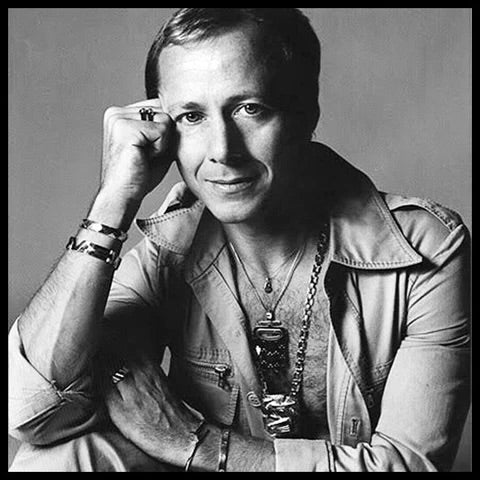

Aldo Cipullo
Aldo Cipullo was an influential jewellery designer known for his innovative designs and distinctive style. Born in Naples, Italy, in 1935, Cipullo’s family had a background in jewellery, and he began his career in the industry at a young age. He later moved to Argentina, where he further developed his skills as a designer.
Cipullo gained international recognition when he moved to New York City in the 1960s and began working for renowned jewellery firms such as Cartier and Tiffany & Co. It was during this time that he created some of his most iconic pieces.
One of Cipullo’s most famous designs is the “Love Bracelet” for Cartier, introduced in 1969. This iconic piece featured a minimalist design with a screw motif, symbolizing eternal love and commitment.
The love bracelet is a timeless piece which is still a bestseller to this day. This iconic piece featured a minimalist design with a screw motif, symbolizing eternal love and commitment.
Cipullo was heartbroken because of a failed relationship, he used jewellery as an outlet to express his feelings and created the love bracelet. The bangle had to be locked together by- and could only be removed with a special, tiny screwdriver. Symbolising the commitment Cipullo was looking for.
His idea was that he would only sell it to couples. He said love became too commercial but life is nothing without love so he created something semi permanent for couples. The bracelet was beautiful in its simplicity which made it timeless.
Cipullo’s designs possess a remarkable sense of simplicity and elegance. He had a unique ability to distill complex ideas into minimalist forms, creating pieces that exude sophistication and refinement. This simplicity allows his designs to transcend trends and remain relevant across generations.
Compare and contrast
Both Aldo Cipullo and Azza Fahmy are renowned jewelry designers who have left a significant impact on the industry, albeit in different ways.
Aldo Cipullo’s work is characterized by its minimalist aesthetic, clean lines, and innovative designs. He is known for creating iconic pieces such as the “Love Bracelet” for Cartier, which symbolizes eternal love and commitment through a simple screw motif. Cipullo’s designs often prioritize simplicity and elegance, using subtle details to convey deep symbolism and emotion. His pieces have a timeless quality that transcends trends and appeals to a wide range of audiences.
On the other hand, Azza Fahmy’s work is more intricate and culturally rich, drawing inspiration from her Egyptian heritage and Islamic traditions. Fahmy’s jewelry designs are characterized by their elaborate motifs, use of calligraphy, and incorporation of historical and cultural references. She is known for pushing boundaries and challenging societal norms, particularly regarding the representation of love and emotions in her work. Fahmy’s designs serve as a powerful storytelling method, highlighting the rich history and culture of her country while also advocating for social change and women’s empowerment.
While both designers have made significant contributions to the world of jewelry, their approaches and inspirations differ. Cipullo’s work is more focused on modern elegance and timeless simplicity, while Fahmy’s designs are rooted in cultural heritage and social commentary. However, both designers share a commitment to craftsmanship, innovation, and storytelling through their jewelry, making them influential figures in the industry.
Weekly reflection
This week we got an introduction to what this course is all about. We learned when our final submissions are and what this module is all about. In this module we will be working on poster research as well as creating our own poster to present our final work. We will also be looking at contemporary artists and comparing their work in a 1500 word essay. Talking about our final submissions and the expectations is quite relieving. I like knowing what’s coming so I can start managing my time. We were also introduced to poster research. We were each asked to research one poster, talk about the colour and aesthetic and historical background of the poster etc. As this was the first time to do a poster research I struggled a bit with what to include. But after presenting my poster research I got back some feedback. So for next time I will be including a bit more colour theory and also the historical background of the poster. All in all this lesson helped set my expectations and start managing my time. By the end of the lesson we were asked to research two contemporary artists and compare their work.
Research sheet
We were asked to create a research sheet with the information we gathered and the source we found the information at. Every source I used got a different colour and I added the information I found there to it.
Azza Fahmy had taken the role of translating the region’s culture and art and historic references to the world, through contemporary jewellery design.
Even Internationally Egypt is most known for the pharaonic era. Azza Fahmy wanted to make sure to dig deep into the symbolism and motifs associated with the pharaonic culture. She went on a 8 year research journey across Egypt to insure that there is authenticity and depth in her designs.
From ancient egypt to modern Arabia, Azza Fahmy jewellery draws inspiration from all eras and areas (2022) Grazia Middle East. Available at: https://graziamagazine.com/me/articles/azza-fahmy-jewellery-interview/ (Accessed: 06 February 2024).
Azza Fahmy is a very well educated woman who enjoys reading and learning a lot. One of her inspirations is a famous historian and philosopher of the 11th century called. She was inspired by his book “ The Ring (or collar) of the dove”.
Azza Fahmy’s work is a powerful storytelling method and also a method to push boundaries in a lot of ways.
Azza Fahmy explained “in our Islamic culture, love is either veiled or metaphysical. Or so I believed until I read the ring of the dove.”
Azza Fahmy’s work is a powerful storytelling method and also a method to push boundaries in a lot of ways.
She launched another collection where she used calligraphy to write famous lines from various love poems from different Egyptian poets. By doing that she again pushed social boundaries by talking freely about love and emotions.
Akkawi, D. (2020) Everyone’s favorite jewelry designer Azza Fahmy tells the story of her career Journey & How she discovered jewelry design was her passion: 925: The first online magazine of its kind in Egypt, 925. Available at: https://925egypt.com/2020/09/03/everyones-favorite-jewelry-designer-azza-fahmy-tells-the-story-of-her-career-journey-how-she-discovered-jewelry-design-was-her-passion/ (Accessed: 06 February 2024).
“So I tied my hair back, put on my overalls and spent my days in a workshop full of men learning the tricks of jewellery making.” – Azza Fahmy
Azza Fahmy Signature coming to life, by combining Gold and Silver together bringing out a beautiful contrast that only she could imagine.
Azza has a passion for Arabic poetry, and she surrounds herself with poets, many of whom she counts among her closest friends. Transfixed by their works, and inspired by her love of calligraphy, she wanted to transform this form of art into jewellery. She started a whole collection, her own anthology, which she describes as ‘intellectual jewellery.’ “I loved poetry so much that I wanted people to wear it” she says.
Timeline (no date) Azza Fahmy Jewellery – Official Website. Available at: https://www.azzafahmy.com/us/timeline (Accessed: 06 February 2024).
Ancient Egypt is definitely an integral part of Azza Fahmy’s brand’s DNA as we are Egyptian. The Egyptian collection took eight years of research and three years of designing and one year of making. So after a total of 12 years. in total, I really feel like my mother earned her title by mastering that. So with that, we try to incorporate this into the newest collections. For me the ancient Egyptians were so famous for symbology. Just like you see in all of our collections, the snake and the lotuses are all symbols of rebirth and renewal.
Interview: Azza Fahmy jewelry: Style.com/arabia (2013) Vogue Arabia. Available at: https://en.vogue.me/archive/faces_of_fashion/interview-azza-fahmy-jewelry/ (Accessed: 06 February 2024).
Born and raised in Sohag in Upper Egypt, Azza Fahmy graduated from Helwan University with a Bachelor of Arts in Interior Design. In 1969, she stumbled upon a Medieval jewellery design book, which became an inspiration for her work. Then a government employee, she kept her day job but ventured into Cairo’s jewellery quarter to learn at the hands of the techniques of the craft at the hands of master goldsmiths.
FAHMY, A. (2023) Azza Fahmy: My life in jewelry. S.l.: AMER UNIV IN CAIRO PRESS.
Each piece of jewellery revolves around a central inspirational motif or a poem that carries a personal message to its wearer, making the calligraphy one of our unique signatures, in addition to pioneering in combining silver & gold.
“This collection was a very old dream of mine…” Azza Fahmy Azza Fahmy was always fascinated by the Bedouins and inhabitants of the desert and oases. The desert portrays mystery, authenticity and yet also simplicity – a source of endless inspiration to the designer with the multitude of elements used by Bedouin women to create their jewellery and the desert being a hub …
FAHMY, A (2015) Azza Fahmy: The traditional jewlry of Egypt Cairo ; New York : The American University in Cairo Press
Weekly reflection
Today we were asked to present our research and also looked at different websites to gather more information and put them together into a research sheet. After reflecting back on the lesson from today, I feel more in control and clear in how I approach research and analysis. The ability to present my comparative presentation and get feedback was important since it not only let me demonstrate my comprehension but also offered suggestions for how I could improve more. Looking at the deadlines and requirements for submissions was a reminder of how important planning is.
The intricate details of researching artists was particularly enjoyable to learn about. Learning the importance of credible sources and getting familiar with sources like Google Scholar offered new opportunities to find reliable information.
For me, it was a new experience to have to search Google Scholar for texts about our chosen artist and then put together a research sheet. It made me analyse the material I was collecting critically, differentiate between reliable and unreliable sources, and organise my results logically. I had never made a research sheet before, but I soon realised how helpful it would be for structuring my ideas and preparing the groundwork for my next essay.
Summarise
After that we were asked to choose three sentences from our research and summarise them.
The bold font ones are the original text and the one after them are the summary.
Ancient Egypt is definitely an integral part of Azza Fahmy’s brand’s DNA as we are Egyptian. The Egyptian collection took eight years of research and three years of designing and one year of making. So after a total of 12 years. in total, I really feel like my mother earned her title by mastering that. So with that, we try to incorporate this into the newest collections. For me the ancient Egyptians were so famous for symbology. Just like you see in all of our collections, the snake and the lotuses are all symbols of rebirth and renewal.
Azza Fahmy’s brand is deeply rooted in Ancient Egyptian culture, reflecting their Egyptian heritage. The Egyptian collection, which took 12 years to research, design, and create, showcases this connection. Fahmy emphasizes the importance of symbolism in Ancient Egyptian culture, with motifs like snakes and lotuses representing rebirth and renewal. These themes are integrated into their newest collections, honoring the legacy of Ancient Egypt and Fahmy’s dedication to mastering her craft.
Azza has a passion for Arabic poetry, and she surrounds herself with poets, many of whom she counts among her closest friends. Transfixed by their works, and inspired by her love of calligraphy, she wanted to transform this form of art into jewellery. She started a whole collection, her own anthology, which she describes as ‘intellectual jewellery.’ “I loved poetry so much that I wanted people to wear it” she says.
Azza Fahmy’s passion for Arabic poetry led her to create a unique collection of jewelry inspired by the art form. Surrounding herself with poets and drawing inspiration from calligraphy, she developed what she calls “intellectual jewelry.” Fahmy aimed to translate the beauty of poetry into wearable art, allowing people to adorn themselves with the essence of poetic expression
Azza Fahmy had taken the role of translating the region’s culture and art and historic references to the world, through contemporary jewellery design.
Even Internationally Egypt is most known for the pharaonic era. Azza Fahmy wanted to make sure to dig deep into the symbolism and motifs associated with the pharaonic culture. She went on a 8 year research journey across Egypt to insure that there is authenticity and depth in her designs.
Azza Fahmy’s modern jewellery designs have made her a global ambassador for Egyptian history and culture. Knowing Egypt’s worldwide status as a pharaonic nation, she went on an in-depth eight-year research journey throughout Egypt to guarantee authenticity and richness in her creations. With her jewellery, Fahmy seeks to convey to the world the richness of Egypt’s culture by exploring the symbolism and motifs of pharaonic civilization
Weekly reflection
This week, we focused on our research sheets and reviewed how to cite properly, which is always helpful. We also practiced summarizing sentences from our research in our own words, which taught us how to avoid plagiarism and organize information better. Additionally, we learned about essay structure, including the introduction, main body, and conclusion. This gave us a clearer idea of how to structure our writing.
All things considered, the lesson this week has given me useful knowledge and skills that I can apply in my academic writing and research projects. I gained confidence in how to do thorough research, properly credit sources, and write interesting essays that clearly communicate my points of view.
how to structure an essay
1. Introduction
•Page Context Setting: Provide necessary background information to give the reader a clear understanding of the topic.
•Scope Definition: Define the scope and limitations of the essay to set expectations.
•Purpose Statement: Clearly state the purpose of the essay and what the reader can expect to gain from it.
•Page Context Setting: Provide necessary background information to give the reader a clear understanding of the topic.
•Scope Definition: Define the scope and limitations of the essay to set expectations.
•Purpose Statement: Clearly state the purpose of the essay and what the reader can expect to gain from it.
•Page Essay Outline: Briefly outline the main points or arguments that will be discussed in the body of the essay.
•Transition Statement: Include a transition statement to smoothly lead the reader from the introduction to the body of the essay.
2. Body
•Topic Sentence: Start each paragraph with a clear topic sentence that introduces the main idea or argument.
•Supporting Evidence: Provide evidence, examples, or data to support the topic sentence and strengthen the argument.
•Analysis and Interpretation: Analyse and interpret the evidence to demonstrate its relevance to the main argument.
•Coherence and Unity: Ensure that each paragraph has a clear focus and relates directly to the thesis statement.
•Transitional Phrases: Use transitional phrases to create smooth transitions between paragraphs and ideas.
•Varied Sentence Structure: Employ a variety of sentence structures to maintain reader engagement.
•Page Acknowledging Counterarguments: Address potential counterarguments to demonstrate a comprehensive understanding of the topic.
•Rebuttal and Refutation: Refute counterarguments with strong evidence and reasoning to strengthen the main argument.
•Balanced Perspective: Present a balanced perspective by acknowledging different viewpoints.
3. Conclusion
•Restating Thesis: Restate the thesis statement and summarize the main points discussed in the body of the essay.
•Key Insights: Highlight the key insights or findings that have emerged from the discussion.
•Call to Action: Provide a call to action or suggest further areas of exploration related to the topic.
•Significance Recap: Emphasize the significance of the topic and its relevance in a broader context.
•Implications: Discuss the implications of the findings and their potential impact on the field or real-world applications.
•Closing Thought: End with a thought-provoking statement that leaves a lasting impression on the reader.
•Page Final Remarks: Offer final remarks that leave the reader with a sense of closure and completion.
•Connection to Introduction: Establish a connection to the introduction to create a cohesive narrative.
•Encouraging Reflection: Encourage the reader to reflect on the key takeaways and consider the broader implications of the essay’s content.
Weekly reflection
During this lesson we learned about the structure of essays which has been very useful for me. It changed the way I approach writing by teaching me how to organise my thoughts. Before I used to struggle with keeping my ideas in order, but now having a clear framework has made the writing process much easier.
I also learned how to tell apart necessary and unnecessary information which helps me stick to the word count and not blabber too much.
Now when I sit down to write my essay I feel more confident and prepared. I know what I want and don’t want to include.
Overall, understanding essay structure has made me become a more effective writer. It made me learn how to clearly get my point across without unnecessary blabber.
PEEL

Point: The project focuses on creating a piece of jewellery that represents Egyptian culture. The author talks about themes of representation and identity.
Evidence: She discusses the idea behind this project which is the significant of jewellery as a from of self- presentation. She also talks about the importance of representation and identity in the Western Asia and Northern Africa (WANA) region.
Explanation: The project aims to address the complexities surrounding identity and representation, particularly in a region historically influenced by Western Orientalism. It highlights the challenges artists face in conforming to external expectations while maintaining authenticity.
Link: By creating a piece of jewelry that incorporates Arabic text and stereotypical design elements, the project seeks to provide a platform for individuals to express their identity and challenge external labels. It connects to broader discussions on cultural representation and the impact of Western narratives on artistic expression in the WANA region.
weekly reflection
I studied the Peel method this week, which is an organised strategy that makes essay writing easier and provides clarity while sticking to word counts. Before this, I often struggled excessive detail and had trouble recognising important elements from unimportant ones. But the Peel method showed the way for straightforward expression while maintaining depth.
Having an understanding of the Peel method gave me a structure for writing essays precisely. I can confidently go through my thoughts and make sure that I communicate my views in a straightforward manner by sticking to its thorough approach. My essays are now easier to write, and I feel more equipped to present my points clearly and effectively.
I decided to follow an organised strategy and use the Peel method’s concepts when I start writing my next essay. I’m sure that if I do this, I’ll be able to control my babbling and write essays that are short, engaging, and effective.
All in all, it has been quite helpful to study the Peel method this week.
What is critical analysis?
•Analyse and categorise theories and research
•Evaluate theories and research
•Compare and contrast theories and research
•Select from theories and research
•Synthesise from theories and research
Reading critically
1.What evidence is produced to convince me?
2.Is the evidence sufficient?
3.Are there any hidden

What is Critical Writing?
•How can I criticise other’s work?
•Are the reasons linked with each other and with the conclusion?
•May the author be biased?
•Cultural, gender, professional biases, etc.
•Does the author clearly outline the basis for his/her theory?
•Are the author’s arguments supported by relevant evidence and other people’s work?
•Are the author’s methods trustworthy?
weekly reflection
Today’s lesson about critical analysis, helped me understand the importance and significance of it. Learning about critical analysis has equipped me with the skill to deconstruct the work of others, showing its strengths, weaknesses and underlying themes. This allows me to get inspired by the different aspects of the pieces.
When I work on my comparative essay analysing the jeweller’s pieces, I find that the principles of critical analysis provide me with a structured framework to articulate my observations. I can identify elements that resonate with me, and which not and get inspired by them.
Overall today’s lesson has underscored the importance of critical analysis for my creative expression. Now I feel more prepared to synthesize different perspectives and enrich my work through thoughtful analysis and reflection.
my poster
One sentence about my poster
My poster will be inspired by my Egyptian heritage and the lively atmosphere in egypt, by getting inspired by Islamic patterns and traditional belly dance.
The lively atmosphere of Egypt.
Belly dancers movements and sounds.
The vibrant atmosphere created by traditional belly dance.
An immersive journey into Egypt’s lively atmosphere
Key words
Lively interactive culture
Typography
The art of arranging letters and text in a way that makes the copy legible, clear, and visually appealing to the reader. Typography involves font styles,
comparative essay
Introduction
Vincent Gracia and Azza Fahmy are both successful jewellery designers who incorporate their cultural heritage into their designs. Gracia draws inspiration from Hispanic Islamic culture, while Azza Fahmy celebrates
Gracia draws inspiration from Hispanic Islamic culture, while Fahmy celebrates ancient Egyptian heritage.
This essay will compare and contrast their works in depth and look into how they incorporate their cultural history, techniques, use of materials and symbolism into their designs.
Background
Vincente Gracia is a Spanish jewellery designer who was born March 8 1961 in Valencia, Spain.
He spent his childhood in the family home in Ruzfas neighbourhood.
Gracia was always passionate about both music and also design, his journey into jewellery design began when he started training at “Massana School of Art and Design” in Barcelona, he enjoyed the free and creative education where he experimented with different artistic mediums before discovering his passion for jewellery design.
(Vicente Gracia Joyas | The artist: VICENTE GRACIA, no date)
His first collection “El Réofro” was made from copper, electric transmitters, Gold and silver. This was his first Avant Grande collection that made him win the Spanish National design award.
(Vicente Gracia Joyas | The artist: VICENTE GRACIA, no date b)
Inspirations
Gracia explores the roots of Hispanic Islamic culture and Sufi poetry for inspiration.
His creations are full of colour and with a touch of the Arabian nights.
The geometric patterns of the Islamic art were always a source of inspiration for the designer, also the arabesque motifs hold symbolic significance for him. They convey a sense of harmony and spirituality.
He gets inspired by Islamic architecture for his designs. The repetitive patterns on the tiles of mosques and palaces symbolize unity and balance.
The flowing arabesque designs that were inspired by natural forms such as vines, leaves and flowers symbolise the connection between nature and spirituality.
(Vicente Gracia Joyas | The artist: VICENTE GRACIA, no date c)
He also uses a lot of motifs that hold cultural and religious significance like the crescent moon, calligraphy or the eight-pointed star.
Vincente Gracia draws inspiration from Islamic art for several different reasons.
He isn’t only captivated by.
Beauty of Islamic art, that is known for its innovative patterns and geometry. By integrating Islamic art, he is also translating his cultural heritage into his jewellery.
As a Spanish designer you can tell his influence by the cultural heritage of Islamic Andalusia.
Islamic Andalusia is a period that brought Islamic presence into Europe, Al Andalus was the Muslim-ruled area of the Iberian Peninsula.
Islamic art flourished during this time, it had quite an impact on the artistic, architectural and cultural landscape of Andalusia.
Islamic Andalusia is not only evident because of the intricate geometrical forms and arabesque motifs but also in the architectural buildings like the Alhambra Palace in Granada, and the Great Mosque of Córdoba. (Al-Andalus, no date)


Córdoba
Gracia is a designer who is deeply connected to Spanish heritage and cultural identity.
Through his jewellery designs, Gracia translates his heritage and preserves the culture by making it contemporary.
Materials and techniques
Gracia uses a lot of different materials and techniques to create his jewellery pieces.
He often incorporates hand engraving techniques to add details and textures into his jewellery. This is a traditional technique which allows more precision to enhance the overall beauty of the design.
Also filigree work is a technique that is quite visible in his work. Which is a technique where you twist, untwist, curl and plate thin threads of precious metals together. This technique allows the designer to create intricate patterns and geometrical, arabesque and floral forms.
Another technique is Granulation. Granulation is a technique where you add tiny granules of metal on another piece of metal to create dimension.
He also uses a lot of colourful stones to translate the happy feeling to his designs. He sets the stones in many different ways whether it is bezel setting, prong setting, and pave setting.
Gracia frequently works with precious metals like gold, silver and platinum. These materials provide durability and value to his pieces.
He also incorporates a wide range of gemstones into his designs to make his designs colourful and portray happiness in them.
In his first collection he had also used copper and electrical transmitters which are innovative materials that you don’t quite see a lot. These materials show his ability to push boundaries and experiment with different materials.
(Nexus, 2023)
Analysis


His jewellery pieces really show his inspiration by Islamic art.
He mixes metals together which I find especially interesting it creates a contrast and makes it look more historical and innovative.
The stars and the moon symbolise gods’ guidance in Islam, Islam emerged in Arabia where they would travel long routes through the desert, they would often travel by night, their navigation depended on the position of the moon and the stars, which are motifs Gracia incorporated into his designs.
Calligraphy is also something that shows his inspiration with Islamic art. He uses Arabic calligraphy in his designs which is a very important aspect of Islam.
According to the Victoria and Albert Museum, The Arabic-written Quran is the foundation of Islam. Arabic calligraphy became essential in Islamic art as a result. The popularity of calligraphy increased as Arabic literature expanded throughout the Islamic world. Verse extracts from the Quran decorated holy objects, while lines regarding wine were inscribed on glasses. Over time, calligraphy styles changed. By the fifth century, softer forms had replaced the angular Kufic style, which had been popular from the fourth to the sixth century.
His designs showcase his ability to connect past and present. By getting inspired by history and incorporating historical elements and motifs into his contemporary designs he creates timeless pieces that still portray the cultural and historical feel.
I chose this artist because of his inspiration by Islamic art and cultural heritage. My final project is intended to portray my identity and culture in a contemporary and innovative way. I got inspired by his inspiration with geometrical forms and the symbolism behind his work.
https://www.1stdibs.com/creators/vicente-gracia-art-jewellery/jewelry
Background
Another artist who also translates her cultural heritage into her designs is Azza Fahmy.
Azza Fahmy is an Egyptian Jeweller who learned her silversmithing skills at a local Egyptian market and built herself up and became international.
She started her journey to becoming a jewellery designer in the late 1960s.
Her journey started when she visited the Cairo International Book Fair in 1969. She stood by a German book called “traditional jewellery of the Middle Ages” by Klement Brenda and was amazed by the pictures of the jewellery.
At the time she was working for the state Information Authority of Egypt, having graduated from the faculty of fine arts in 1965. She was not happy with her job and was wondering what she wanted to do with her life, until she encountered the German jewellery book.
FAHMY, A (2015) Azza Fahmy: The traditional jewlry of Egypt Cairo ; New York : The American University in Cairo Press (page 1)
She became an apprentice to one of the great craftsmen in Egypt’s largest jewellery market, khan al Khalili.
In that time, it was quite uncommon for a wealthy and well-educated women to work in a local silversmithing workshop. It was more common for university dropouts that are men to work in that field as it was dominated by men. By working there Azza Fahmy pushed boundaries and challenged
traditional norms, proving her willingness and determination to go against the norms of society.
FAHMY, A (2015) Azza Fahmy: The traditional jewlry of Egypt Cairo ; New York : The American University in Cairo Press (page 4)
1980 she launched her first collection “houses of the Nile”. She envisioned how combining silver and gold would create an aesthetically pleasing contrast and became the first jeweller in Egypt to mix materials together. This became her signature creating an authentic and innovative style in her work.
(timeline, no date)
Inspiration
From the beginning her goal and ambition was to reflect Egyptian Folk heritage in her work. She wanted to translate her regions culture, art and historic references to the world through contemporary jewellery design.
She uses methods such as incorporating motifs and symbols from ancient Egypt, getting inspired by Egyptian art and architecture to portray Egyptian heritage in her designs
As a very well educated woman who enjoys reading about her Arabic culture she also gets inspired by Arabic poetry, music and literature. She incorporates Arabic calligraphy, verses from classical poetry and Arabic symbols into her pieces.
(Azza Fahmy Jewellery draws inspiration from all eras and areas, 2022)
This portrays her Arab heritage and her cultural heritage which she chooses to celebrate through her jewellery designs.
Nature is another important source of inspiration for the Egyptian jewellery designer. She incorporates arabesque motifs which are often inspired by organic forms, such as flowers, leaves and animals. These motifs portray a connection between nature and spirituality and symbolise renewal.
Azza Fahmy uses her work as an outlet to express herself and push boundaries of societal norms. (timeline, no date)
Her work is not only a method to push boundaries but also a powerful storytelling method which reflects her life and cultural identity as well as her mindset.
But Fahmy didn’t only get inspired by Egyptian architecture, poetry and ancient Egypt.
She got inspired by different Egyptian Folk and tribes.


She got inspired by shaabi and peasant jewellery. She created this necklace inspired by Egyptian peasant (Fallahy) jewellery. (Search results for: ‘Falahy necklace,’ no date)


Here she got inspired by a tribe in the desert and their traditional clothes and created this necklace. (Search results for: ‘desert jewellery,’ no date)


She also got inspired by Nubian village architecture and created a collection with Nubian architecture.
(Search results for: ‘nubian house ring,’ no date)
Materials and techniques
Azza Fahmy uses a variety of contemporary and traditional techniques to create her designs.
She often incorporates traditional Egyptian and Arab craftsmanship techniques like metalworking, filigree and engraving.
Her pieces are handcrafted in her Cairo-based workshop.
She also combines a range of different materials and metals such as gold and silver as well as gemstones, beads and pearls.
FAHMY, A (2015) Azza Fahmy: The traditional jewlry of Egypt Cairo ; New York : The American University in Cairo Press (page 17)
Also Arabic calligraphy is often incorporated into her designs either as decorative motifs or meaningful inscriptions that tell a story.
Her designs are rooted in tradition but still embrace contemporary aesthetics. She manages to build a bridge between past and present and preserve her cultural heritage.
Interview: Azza Fahmy jewelry: Style.com/arabia (2013) Vogue Arabia. Available at: https://en.vogue.me/archive/faces_of_fashion/interview-azza-fahmy-jewelry/ (Accessed: 06 February 2024).
Analysis
Her designs show her deep inspiration by her culture and heritage which she portrays in many different ways.
She translates her culture into her designs by getting inspired by Arabic and Egyptian poetry, music, architecture, history, tribes and folk.
She uses her jewellery as an outlet to express herself, tell stories, and push societal norms. By creating contemporary designs that are rooted in cultural history she celebrates her heritage and preserves not only the history and art but also the traditional craftsmanship techniques.
She achieved her goal by showing the world Egypt’s rich culture that is more than just pharaohs.

(Search results for: ‘god blessings ring,’ no date)
This gold ring is called “Gods blessings” the ring is adorned with Diamonds and inscribed with “Endearment”, “Mercy” and “Blessings”.
Religion and Islam is a very important part of Egyptian culture. Here she portrays a part of the religion in her jewellery design using calligraphy.

(Search results for: ‘Um Kulthoum Cuff,’ no date)
Here you can see the mixed metals. This is a Gold and Sterling Silver hand cuff adorned with calligraphy, precious stones, and filigree work.
This Hand cuff has the lyrics of one of Um Kulthoum’s (a very famous Egyptian singer) songs on it. It says “The heart adores all that is beautiful and how much beauty have my eyes seen”.
I chose to research this artist because Her ability to flourish with limited recourses in Egypt is very inspiring. Azza Fahmy’s exquisite jewellery designs have left an indelible mark on the world of art craftsmanship. She built a very diverse list of clients from around the globe including celebrities and royalty. From the beginning she set an important goal for herself: translating the authentic cultures of the Middle East into designs and introducing them to the world. Each piece tells a story and holds meaning and this is what I aspire to. Her ability to seamlessly blend tradition with contemporary flair is truly inspiring.
Compare and contrast
Inspirations
Vincente Gracia draws inspiration from his heritage as a Spanish designer Hispanic Islamic culture connects with his culture.
He incorporates geometric patterns, arabesques and symbols like the crescent moon and stars which reflect the influence of Islamic art and architecture into his designs.
Azza Fahmy is also inspired by her heritage as an Egyptian Islamic art is also a big part of her culture.
She draws inspiration by Egyptian culture aand heritage. She incorporates ancient Egyptian symbols and motifs and arabic poetry into her designs. She also gets inspired by Egyptian folk art, tribes and nature which she often portrays in her jewellery.
Techniques and Materials
Both artists use traditional techniques such as hand engracving, filigree work and granulation into their designs.
They also both combine metals like gold and silver together creating inticate pieces and a beautiful contrast.
Gracia includes colourful gemstones to create vibrant colours to portray joy, while Azza Fahmy includes less colour, more precious stones and calligraphy to portray her culture.
Design styles
Gracias designs show elegance and focus on patterns, vibrant colours and symbolic motifs inspired by Islamic art. They are always vibrant and colourful to portray joy.
However Azza Fahmy’s designs reflect a fusion of tradition and modernity, showcasing a blend of ancient Egyptian motifs, contemporary aesthetics, and personal expression. Her jewellery pieces are characterized by their storytelling elements, cultural references, and timeless elegance.
Cultural Heritage
Gracia celebrates his Hispanic Islamic heritage through his designs while Azza Fahmy celebrates her Egyptian heritage and culture through her designs. Both are quite similar cultures as they are both deeply rooted in Islamic Art.
All in all , while both Vicente Gracia and Azza Fahmy are accomplished jewellery designers who celebrate their cultural heritage through their work, they express their inspirations in distinct ways, usisng different techniques, materials, and design styles rooted in their cultural backgrounds and personal journeys.
Bibliography
Fanack (2023) Azza Fahmy: Arab storytelling through jewellery, Fanack. Available at: https://fanack.com/faces/features-insights/azza-fahmy~126438/ (Accessed: 06 February 2024).
From ancient egypt to modern Arabia, Azza Fahmy jewellery draws inspiration from all eras and areas (2022) Grazia Middle East. Available at: https://graziamagazine.com/me/articles/azza-fahmy-jewellery-interview/ (Accessed: 06 February 2024).
Akkawi, D. (2020) Everyone’s favorite jewelry designer Azza Fahmy tells the story of her career Journey & How she discovered jewelry design was her passion: 925: The first online magazine of its kind in Egypt, 925. Available at: https://925egypt.com/2020/09/03/everyones-favorite-jewelry-designer-azza-fahmy-tells-the-story-of-her-career-journey-how-she-discovered-jewelry-design-was-her-passion/ (Accessed: 06 February 2024).
Timeline (no date) Azza Fahmy Jewellery – Official Website. Available at: https://www.azzafahmy.com/us/timeline (Accessed: 06 February 2024).
Interview: Azza Fahmy jewelry: Style.com/arabia (2013) Vogue Arabia. Available at: https://en.vogue.me/archive/faces_of_fashion/interview-azza-fahmy-jewelry/ (Accessed: 06 February 2024).
FAHMY, A (2015) Azza Fahmy: The traditional jewlry of Egypt Cairo ; New York : The American University in Cairo Press
Nexus, D. (2023) ‘What is Filigree jewelry?,’ Diamond Nexus, 28 September. https://www.diamondnexus.com/blog/what-is-filigree-jewelry/#:~:text=Filigree%20work%20is%20created%20by,tiny%20beads%20are%20used%20too.
Vicente Gracia Joyas | The artist: VICENTE GRACIA (no date a). https://vicentegraciajoyas.com/en/the-artist-vicente-gracia/.
Vicente Gracia Joyas | The artist: VICENTE GRACIA (no date b). https://vicentegraciajoyas.com/en/the-artist-vicente-gracia/#:~:text=His%20first%20collection%2C%E2%80%9CEl%20Re%C3%B3foro,that%20emerged%20after%20Franco%27s%20regime.
Al-Andalus (no date). https://books.google.co.uk/books?id=lLAryx8bC8UC&printsec=frontcover&redir_esc=y#v=onepage&q&f=false.
https://www.1stdibs.com/creators/vicente-gracia-art-jewellery/jewelry

